The Real Answer to “Is It Painful to Remove a Tattoo” — Before You Book That Appointment
Is it painful to remove a tattoo? Yes — but how much depends on several factors, including where the tattoo is, how old it is, and your personal pain tolerance.
Here’s a quick breakdown:
| Factor | Pain Level Impact |
|---|---|
| Body location (ribs, ankles, wrists) | Higher pain |
| Body location (thighs, biceps, calves) | Lower pain |
| Older tattoos | Less painful to remove |
| Darker ink (black, dark blue) | More intense laser reaction |
| Lighter ink (yellow, white) | Harder to target, more sessions |
| Short session (small tattoo) | 1–3 minutes of discomfort |
| Larger tattoo | Up to 20 minutes per session |
Most people describe the sensation as a rubber band snapping hard against the skin — intense in the moment, but brief. Sessions typically run just a few minutes for small tattoos.
The discomfort is real, but for most people it’s manageable — especially with proper numbing options and a skilled technician.
According to a 2023 Pew Research Center survey, 32% of American adults have at least one tattoo, and about 24% of them regret getting it. Among millennials, nearly half have tattoos — and roughly 1 in 4 wish they hadn’t gone through with it.
That’s a lot of people quietly Googling whether the removal process is worth it.
Tattoos are designed to be permanent. The ink sits deep in the dermis layer of your skin — far below the surface cells your body naturally sheds. Your immune system can’t flush it out on its own because the ink particles are simply too large. That’s what makes removal a process, not a quick fix.
And yes — it takes work to undo what took minutes to put in.
I’m Faisal S. Chughtai, founder of Tatto World, where I’ve spent years researching and writing about everything from tattoo aftercare to the real-world question of is it painful to remove a tattoo — so you get honest, practical answers backed by expert sources. Let’s walk through exactly what the process feels like, what affects your pain level, and how to make the experience as manageable as possible.
Is It Painful to Remove a Tattoo? Understanding the Sensation
When we talk about whether is it painful to remove a tattoo, we have to move past a simple “yes” or “no.” For most of us at Tatto World who have seen or experienced the process, the sensation is unique. It isn’t exactly like a cut or a burn; it’s more of an aggressive, localized “zap.”
The most common analogy you’ll hear in the industry is that it feels like a heavy-duty rubber band being snapped against your skin. However, some professionals and patients go a step further. In a recent report, some individuals rated the pain as a “9 out of 10,” describing it as a rubber band being snapped on your skin with hot bacon grease. That “grease” sensation comes from the heat of the laser as it reacts with the ink particles.

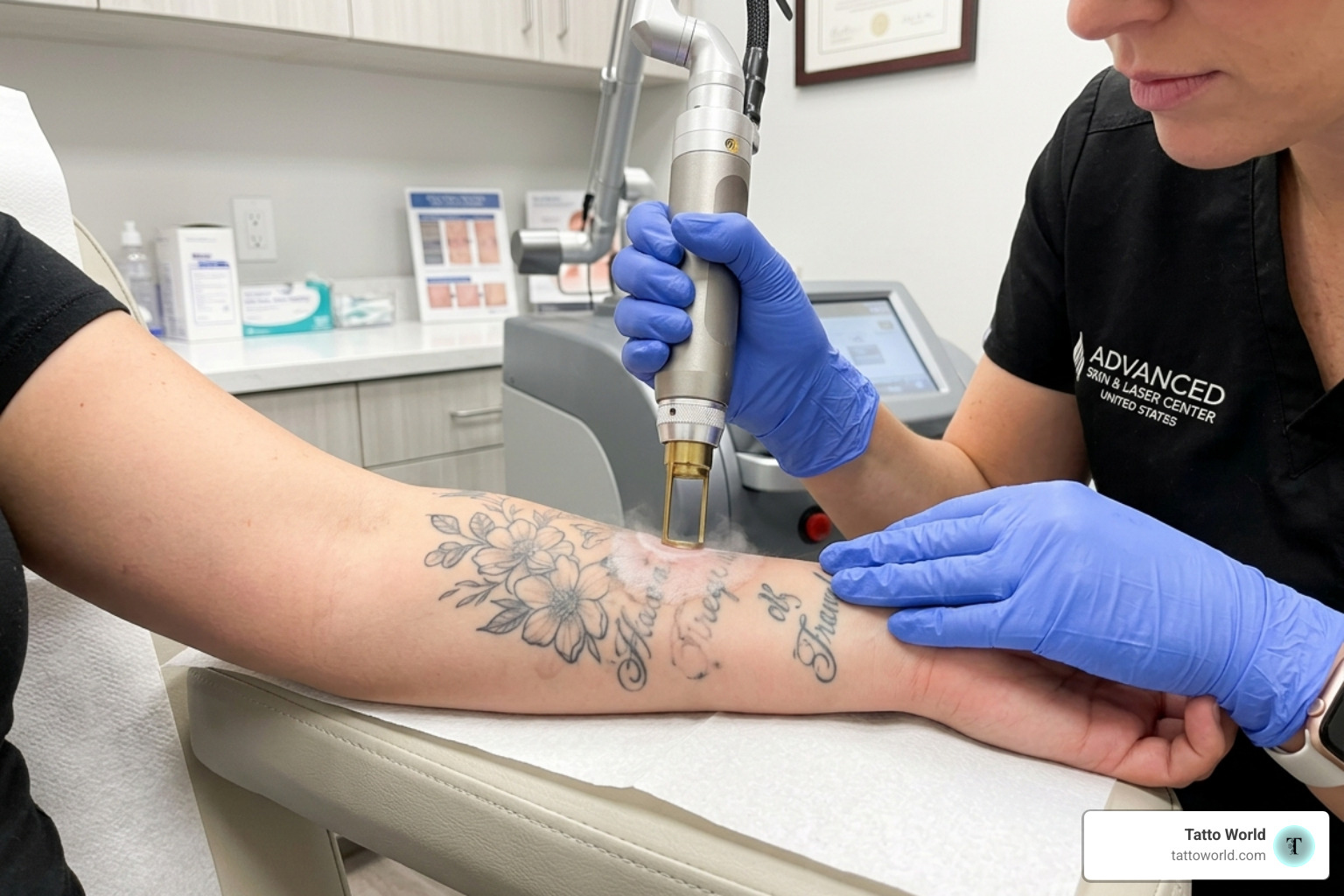
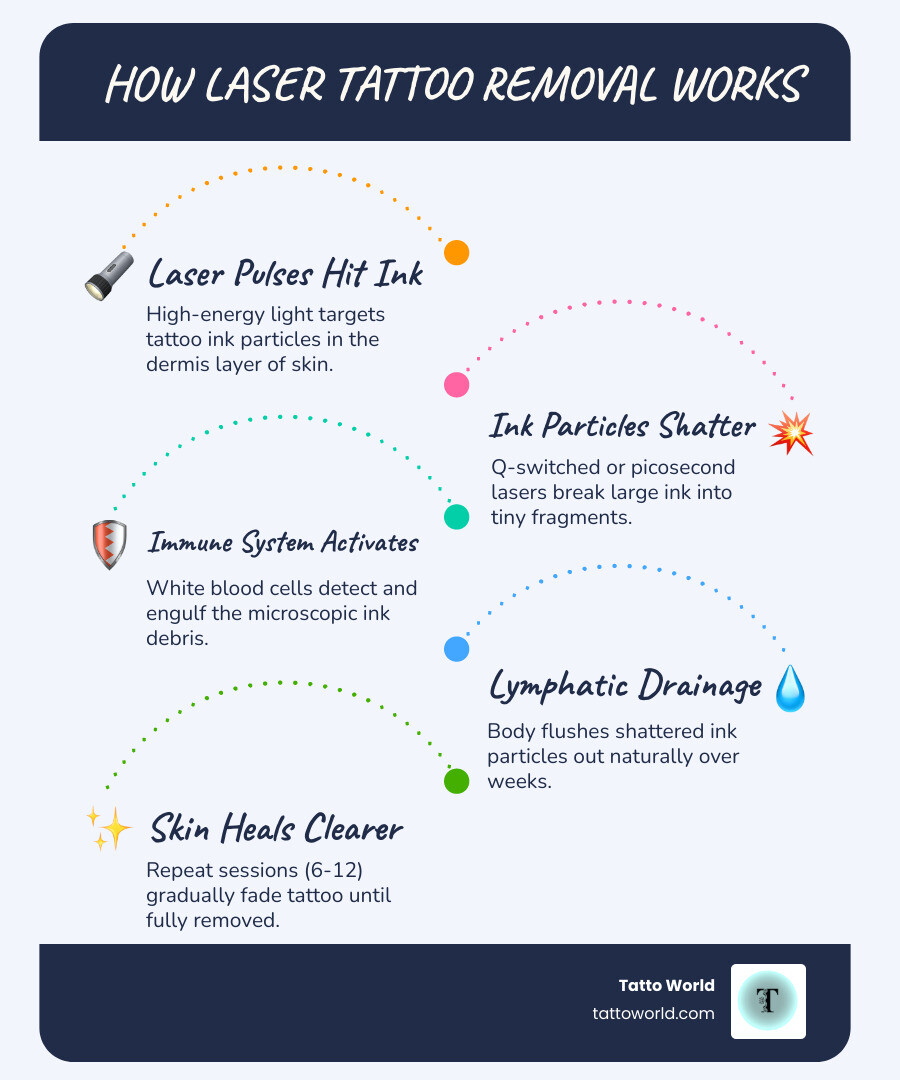
The reason for this intensity lies in how your nerves react to the laser. The laser emits extremely short pulses of high-intensity light. These pulses travel through the top layer of your skin (the epidermis) and are absorbed by the ink particles in the dermis. When the ink absorbs this energy, it shatters. This happens so quickly—in billionths or trillionths of a second—that it creates a tiny shockwave in the skin. Your nerve receptors pick up this rapid pressure and heat change, sending a sharp “ouch” signal to your brain.
The good news? Because the laser moves so quickly, the pain is not a long, drawn-out ache. It’s a series of fast, stinging zaps. For a small tattoo, you might only be in the chair for 60 seconds. While the sensation is intense, the brevity makes it tolerable for the vast majority of people. We also have to consider that does laser tattoo removal leave scars is a common worry, but modern technology focuses the energy so precisely that it minimizes damage to the surrounding tissue, which actually helps keep the pain localized. You can learn more about the specifics of the sensation in this guide on Tattoo Removal Pain: Pain Level, Ways to Lessen Pain.
Why is it painful to remove a tattoo compared to getting inked?
This is the million-dollar question. Most people assume that if they could handle the needle, they can handle the laser. However, many find that laser tattoo removal is more painful than getting inked.
When you get a tattoo, the needle moves up and down, depositing ink. It’s a rhythmic, scratchy sensation that many people find almost meditative after the first ten minutes. Your body releases endorphins to help you cope with the steady “cat lick” feeling.
Removal is different. Instead of a steady rhythm, you’re experiencing rapid-fire bursts of energy. It’s like the difference between a slow, steady rain and a sudden, intense hailstorm. The energy required to shatter ink particles is significantly higher than the energy required to deposit them. Furthermore, while a tattoo artist might spend hours on a piece, a laser technician covers that same area in a fraction of the time. This means the “pain density”—the amount of discomfort per second—is much higher during removal.
How the location determines if it is painful to remove a tattoo
Just like when you first got your ink, “location, location, location” is the golden rule for pain. Areas with thin skin, lots of nerve endings, or bone directly beneath the surface are going to be much more sensitive.
We’ve put together this comparison table based on patient feedback and clinical observations:
| Sensitivity Level | Body Parts | Why It Hurts |
|---|---|---|
| Extreme | Ribs, Spine, Fingers, Ankles, Head | Thin skin over bone; high nerve density. |
| High | Wrists, Feet, Armpits, Neck | Sensitive skin and proximity to joints. |
| Moderate | Forearms, Back, Chest, Shoulders | More muscle padding, but still sensitive. |
| Low | Thighs, Calves, Outer Bicep | “Meaty” areas with more fat/muscle to cushion the impact. |
For those looking into how to get rid of eyebrow tattoo, the face is a particularly sensitive area. Because the skin around the eyes is so thin, the sensation can feel much sharper than it would on your arm. However, because these tattoos are usually small and use different types of ink, the sessions are incredibly fast.
Factors That Influence Your Pain Experience
Beyond just where the tattoo is, several other factors play a role in whether is it painful to remove a tattoo for you specifically.
- Tattoo Age: Older tattoos are generally easier (and slightly less painful) to remove. Over time, your body’s immune system has already started the work for us, slowly breaking down and hauling away tiny fragments of ink. This means there is less “dense” ink for the laser to hit.
- Ink Color: This is a big one. Black ink is the easiest to remove because black absorbs all laser wavelengths. However, because it absorbs so much energy, the initial “snap” can feel quite strong. Brighter colors like yellow, red, and white are much harder to target and may require different laser wavelengths, which can change the sensation.
- Skin Tone: People with darker skin tones require a more cautious approach to avoid pigmentation changes. Technicians often use specific lasers, like the Q-switched Nd:YAG, which are safer for darker skin but might require more sessions to achieve full removal.
- Pain Tolerance and Stress: Your mental state matters! If you go into an appointment terrified and tensed up, your brain will amplify every sensation. We always recommend our readers at Tatto World try to stay relaxed, as high stress levels are proven to lower your pain threshold.
As the Mayo Clinic Press notes, while the process can be painful, it is generally considered safe when performed by a professional who can tailor the treatment to your specific skin and tattoo type.
The role of the technician and equipment
The person behind the laser is just as important as the laser itself. A skilled technician knows how to adjust the “spot size” and the energy frequency to maximize ink shattering while minimizing skin irritation.
Modern equipment has also come a long way. Many clinics now use Picosecond technology, which fires pulses even faster than older Q-switched lasers. This results in smaller ink particles and often less heat damage to the surrounding skin, which can make the recovery process smoother.
If you’re interested in the “how” behind the scenes, you can check out our article on how to become a tattoo removal technician to see the level of training required to handle these powerful machines safely.
Professional Methods to Manage and Lessen Discomfort
We don’t want the fear of pain to stop you from moving on from a tattoo you regret. There are several ways we can manage the discomfort:
- Topical Numbing Creams: These are the most common solution. Creams containing lidocaine are applied to the skin 30 to 60 minutes before the session. They don’t make the area 100% numb, but they significantly dull the sharp “sting” of the laser.
- Cold Air Machines: Many top-tier clinics use a device (often called a Zimmer cooler) that blows a constant stream of freezing cold air onto the skin before, during, and after the laser pulses. This is often the most effective way to manage the heat sensation.
- Ice Packs: Simple but effective. Applying ice before the treatment numbs the nerves, and applying it after helps reduce immediate swelling.
- Injectable Anesthetics: In some medical settings, a doctor may offer lidocaine injections to completely numb the area. This is usually reserved for very sensitive areas or patients with extremely low pain tolerance.
- Acetaminophen (Tylenol): Taking Tylenol an hour before your session can help. Note: Avoid Ibuprofen or Aspirin, as these can thin the blood and increase bruising.
According to WebMD, using these management options can turn a “9/10” pain experience into a much more manageable “3 or 4/10.” You can find more details on finding the right help in our list of no more regrets with these top rated tattoo removal clinics.
Why you should avoid at-home removal methods
We’ve seen the “DIY tattoo removal” videos, and we have to be clear: please don’t try this at home.
Methods like salabrasion (scrubbing the skin with salt) or using high-acid “removal creams” bought online are incredibly dangerous. These methods often result in:
- Severe Chemical Burns: Most DIY creams are unregulated and can eat through your skin layers.
- Permanent Scarring: Unlike a laser, which targets ink, these methods destroy the skin itself.
- Infection: Opening up your skin in a non-sterile environment is a recipe for disaster.
As we discuss in our deep dive on how to remove a tattoo at home, these methods are almost never effective at reaching the deep ink particles and usually leave you with a scarred version of the tattoo you were trying to hide.
What to Expect During and After Your Sessions
Knowing the timeline helps manage the psychological aspect of the pain. Tattoo removal is a marathon, not a sprint. Most people will need anywhere from 6 to 12 sessions, though some complex tattoos can take 15 or more.
During the Session
The technician will clean the area and provide you with protective eyewear. You’ll hear a clicking sound as the laser fires. You might see a temporary white “frosting” on the skin—this is just carbon dioxide being released as the laser hits the ink. It usually disappears within 20 minutes.
Immediately After
The area will feel like a bad sunburn. It will be red, swollen, and potentially tender to the touch. Some people experience minor blistering or pinpoint bleeding, which is a normal part of the immune response. As the Cleveland Clinic explains, your body’s lymphatic system is now doing the heavy lifting, carrying away the shattered ink particles over the next several weeks.
If you’re planning a “cover-up” tattoo, you’ll need to wait until the removal process and healing are completely finished. Check out our guide on can you tattoo over a removed tattoo for the proper timeline.
Long-term recovery and session frequency
We typically recommend spacing sessions at least 8 weeks apart. Why so long? Your skin needs time to heal, but more importantly, your immune system needs time to flush out the ink. Rushing the process doesn’t make the tattoo fade faster; it just increases the risk of skin damage.
During this time, you should:
- Apply a fragrance-free moisturizer or antibacterial ointment as directed.
- Avoid the sun! UV exposure can cause hyperpigmentation in the treated area.
- Avoid picking at any scabs or blisters to prevent scarring.
Budgeting for this process is also a common concern. We’ve compiled a list of affordable tattoo removal options for every budget to help you plan the financial side of your journey.
Frequently Asked Questions about Tattoo Removal Pain
Does the pain get worse with each session?
Actually, many patients find the opposite! As the ink density decreases, there is less pigment for the laser to react with. This often means the “snap” feels less intense in later sessions. However, the technician may increase the laser’s intensity to reach deeper, stubborn ink, so it can be a bit of a trade-off.
Can I take ibuprofen before my appointment?
We generally advise against it. Ibuprofen (Advil, Motrin) and Aspirin are blood thinners, which can increase the risk of bruising and bleeding during and after the laser treatment. Stick to Acetaminophen (Tylenol) for pain management.
Is laser removal safer than surgery or dermabrasion?
Yes, in almost every case. Laser removal uses “selective photothermolysis,” meaning it specifically targets the ink without destroying the surrounding skin cells. Surgical excision involves cutting the skin out and stitching it back together (leaving a scar), and dermabrasion literally sands the skin down, which is highly unpredictable. As the Mayo Clinic notes, lasers are the modern standard for a reason.
Conclusion
So, is it painful to remove a tattoo? It certainly isn’t a trip to the spa, but it is a manageable, brief discomfort that paves the way for a fresh start. Whether you’re looking to clear space for new art or simply want to erase a memory from your 20s, the “rubber band reality” is a small price to pay for long-term freedom from unwanted ink.
At Tatto World, we believe that being informed is the best way to reduce anxiety. When you know what to expect—from the hot bacon grease sensation to the 8-week healing intervals—you can walk into your consultation with confidence.
Ready to take the next step? Make sure to choose a qualified professional to ensure your safety and the best possible results. For more tips on the process, check out our More info about tattoo removal section. We’re here to help you navigate every step of your tattoo journey, from the first drop of ink to the last zap of the laser.