Why Native American Tattoo Symbols Mean More Than You Think
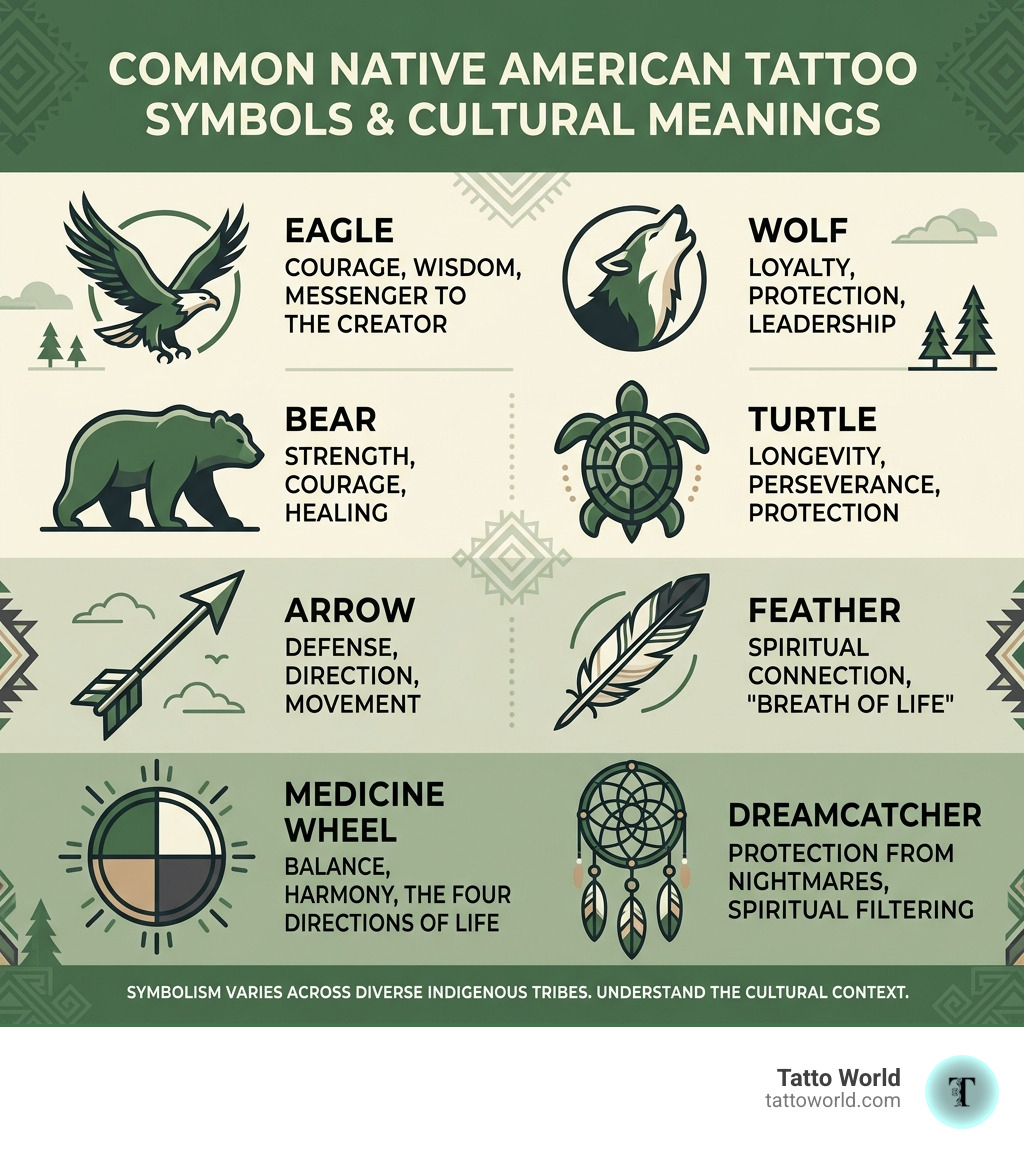
Native American tattoo symbols are a rich visual language — each design carries centuries of spiritual meaning, tribal identity, and cultural history. Here’s a quick overview of the most common symbols and what they represent:
| Symbol | Core Meaning |
|---|---|
| Eagle | Courage, wisdom, messenger to the Creator |
| Wolf | Loyalty, protection, leadership |
| Bear | Strength, courage, healing |
| Turtle | Longevity, perseverance, protection |
| Arrow | Defense, direction, movement |
| Feather | Spiritual connection, “Breath of Life” |
| Medicine Wheel | Balance, harmony, the four directions of life |
| Dreamcatcher | Protection from nightmares, spiritual filtering |
These symbols aren’t just cool-looking designs. They were — and still are — a sacred form of communication used across dozens of distinct Native American tribes.
Getting one without understanding what it means is how well-intentioned people end up with something deeply disrespectful on their skin for life.
Before you book that appointment, it’s worth knowing the real story behind these symbols — their origins, their purpose, and why some of them carry meanings that go far beyond what any Google image search will tell you.
My name is Faisal S. Chughtai, and through years of researching tattoo culture and meaning, I’ve developed a deep appreciation for the history and significance behind Native American tattoo symbols. In this guide, I’ll walk you through everything you need to know before choosing a design you’ll be proud to wear.
The Sacred History of Native American Tattooing
Long before modern tattoo machines and synthetic inks arrived on the shores of North America, indigenous peoples had perfected the art of permanent body marking. In our research into these ancient practices, we’ve found that tattooing was far more common than many realize. For most tribes, it wasn’t a fashion statement; it was a spiritual necessity.
Traditional Materials and Methods
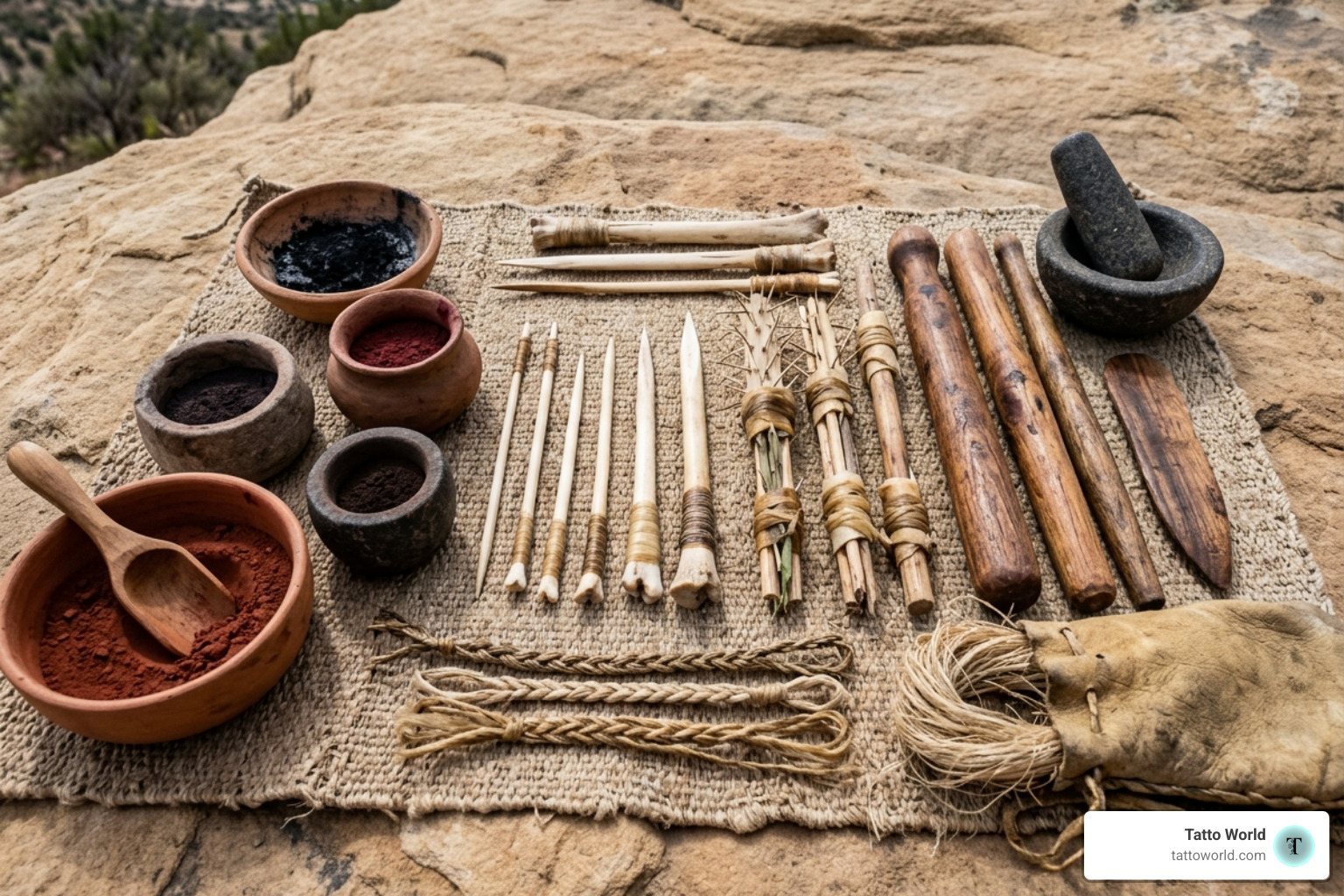
Creating Native American tattoo symbols was a labor-intensive, often painful process that required immense skill. Artists—who were often highly respected members of the community—used tools harvested directly from nature. Bone needles, sharpened wood, and even cactus thorns served as the “needles.”
The ink was equally natural, typically made from soot, charred wood (ash), or ground minerals mixed with water or oil. In some regions, indigo or red clay provided a splash of color. The process wasn’t just about the art; it was a ceremony, often accompanied by prayers and rituals to ensure the tattoo served its spiritual purpose.
Rites of Passage and Status Markers
In many cultures, a tattoo was a visual CV. It told everyone who you were, what you had achieved, and where you belonged.
- The Iroquois Warrior: Historical accounts mention one Iroquois warrior chief who had over 60 tattooed characters on his chest and arms. Each of these marks represented an enemy killed in battle—a permanent record of his bravery and service to his people.
- Tribal Identification: Tattoos served as a “secret language” that revealed a person’s tribe and clan without a single word being spoken.
- Healing Rituals: Some tattoos were applied for medical reasons, placed over joints or areas of pain to act as a form of spiritual acupuncture.
The Sioux Legend and the Afterlife
Perhaps the most profound reason for getting Native American tattoo symbols was the journey beyond this life. According to Sioux legend, when a person dies, their soul travels toward the “Many Lodges” in the afterlife. Along the way, they encounter an old woman who inspects their skin. If the individual lacks the proper tattoos, they are denied entry and forced to wander the earth as a ghost. For the Sioux, ink was literally a passport to eternity.
Decoding Popular Native American Tattoo Symbols and Their Meanings
When we look at Native American tattoo symbols today, we see a blend of animal spirits and geometric patterns. Each one is a “geometric portrayal” of the natural and celestial worlds.
The Power of the Animal Kingdom
Animals are central to indigenous symbolism because they are seen as spirit guides or “totems.” We’ve compiled a comparison of common animal symbols to help you understand their traditional roots:
| Animal | Primary Symbolism | Tribal Context |
|---|---|---|
| Eagle | Divine Spirit, Freedom | Messenger to the Creator (Abenaki, Plains) |
| Wolf | Leadership, Loyalty | Wolf Clan affiliation (Cherokee) |
| Bear | Courage, Strength | Healing and protection (Various) |
| Turtle | Longevity, Health | “Mother Earth” and perseverance (Iroquois) |
| Snake | Transformation | Healing and life cycles (Southwest) |
| Raven | Intelligence | Trickster and creator (Haida/Pacific Northwest) |
The Eagle: Messenger to the Great Spirit
The Eagle Symbol is perhaps the most sacred of all. Because the eagle flies higher than any other bird, it is believed to be the only creature capable of delivering prayers directly to the Creator. In council meetings, holding an eagle feather aloft was a guarantee that the speaker was telling the truth.
The Turtle: The 150-Year Symbol
Turtles can live up to 150 years, which is why they are the ultimate symbol of health and long life. In many creation stories, the world was built on the back of a giant turtle. Choosing this symbol in a tattoo often represents a desire for protection and the strength to persevere through life’s hardships.
The Spiritual Power of Animal Native American Tattoo Symbols
In many traditions, an individual isn’t just connected to one animal. Some tribes believe a person is connected to nine different totem animals throughout their life, with different guides appearing as the person moves through various life phases.
For the Haida people of the Pacific Northwest, animal designs are incredibly intricate, using a style known as “formline.” These aren’t just animals; they are clan crests that tell the story of a family’s lineage and social status. If you see a Haida-style raven or orca, you’re looking at a family’s entire history captured in ink.
Sacred Geometry in Native American Tattoo Symbols
Not every tattoo was an animal. Geometric shapes held equal weight:
- Arrows: A single arrow represents defense and protection. Two crossed arrows symbolize friendship, while a broken arrow represents peace.
- Feathers: Often called the “Breath of Life,” feathers represent a connection to the spirit world. In some tribes, earning a feather tattoo was a major milestone, similar to receiving a medal of honor.
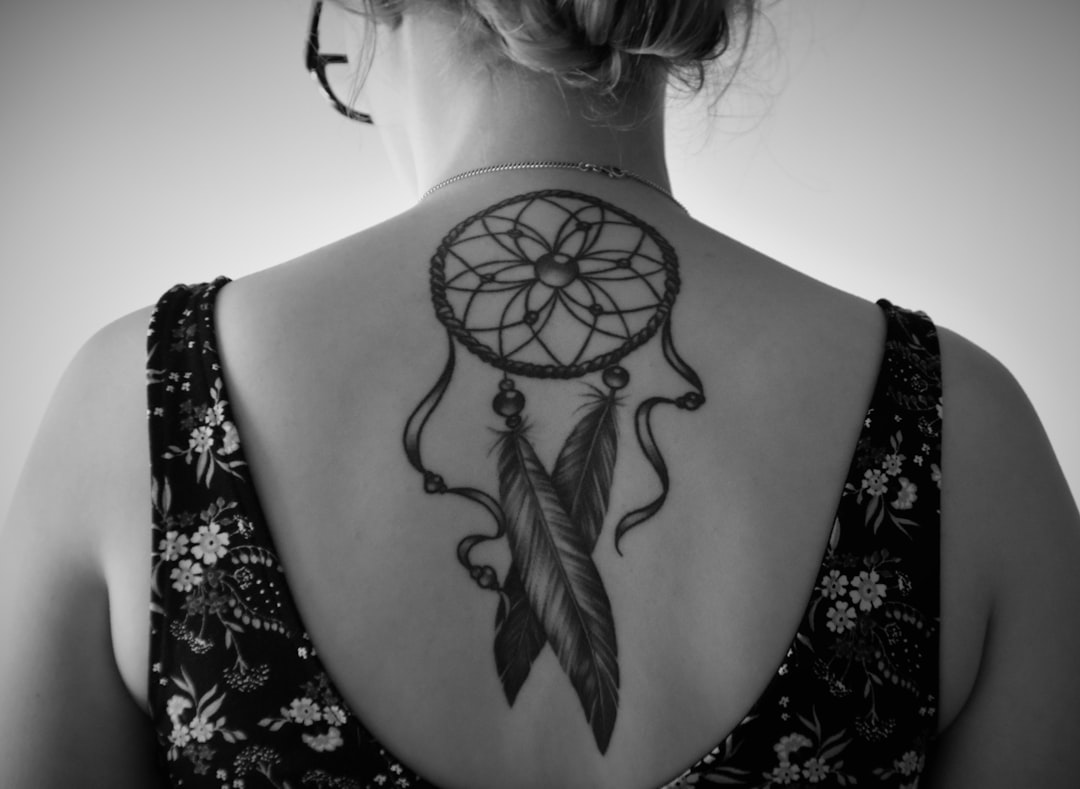
- Dreamcatchers: While very popular in modern shops, the dreamcatcher originated with the Ojibwe people as a protective charm to filter out bad dreams and let only positive thoughts through.
- Kokopelli: This hunchbacked flute player is a staple of Southwestern art, symbolizing fertility, music, and the transition of the seasons.
Tribal Variations: From Cherokee Roses to Haida Formline
One of the biggest mistakes we see people make is treating all “Indian” tattoos as the same. In reality, there are hundreds of distinct nations, each with its own aesthetic.
The Cherokee Rose and Resilience
The Cherokee Rose is a poignant design. It is deeply linked to the “Trail of Tears”—the forced relocation of the Cherokee people in the 1830s. Legend says that the tears of the mothers who lost children on the trail grew into these white roses. In a tattoo, the Cherokee Rose represents resilience, strength, and the ability to overcome unimaginable adversity.
The Lakota Medicine Wheel
The Lakota Medicine Wheel is a sacred circle divided into four quadrants. Each quadrant represents a direction (North, South, East, West), a color (White, Red, Yellow, Black/Blue), an element, and a stage of life. It is a guide for living a balanced life.
- North: White, wisdom, and winter.
- East: Yellow, new beginnings, and spring.
- South: Red, growth, and summer.
- West: Black, introspection, and autumn.
Inupiat and Haida Traditions
In the Arctic, Inupiat women traditionally wore chin tattoos. These vertical lines were milestones, marking marriage, the birth of children, or a woman’s coming of age. Similarly, the Haida use bold, flowing lines to depict ravens, eagles, and bears, creating a visual map of their family tree.
Cultural Etiquette: Respecting the “Native American Tattoo Symbols”
As we move through 2026, the conversation around cultural appropriation has become more important than ever. At Tattoo World, we believe that art should be shared, but it must be respected.
Appreciation vs. Appropriation
There is a fine line between honoring a culture and “stealing” its sacred symbols. Getting a tattoo of a Medicine Wheel or a tribal crest just because it “looks cool” can be offensive to the people for whom those symbols are a living part of their spirituality.
- Research is Mandatory: Don’t just pick a design from a stock photo library (even though libraries like iStock contain over 2,400 Native-inspired images). Understand the specific tribe it comes from.
- Consult Indigenous Artists: If you want a truly authentic and respectful piece, seek out a Native American tattoo artist. They can guide you on which symbols are appropriate for “outsiders” and which are considered “unearned” or sacred.
- Permission: In some cultures, certain tattoos must be earned through specific deeds. Wearing an unearned warrior mark is seen as a form of “stolen valor.”
Why Modern Native American Tattoo Symbols Require Research
The revival of indigenous tattooing is a beautiful thing. Many young Native people are reclaiming their heritage by getting traditional chin tattoos or hand-poked designs. For non-Native people, the goal should be symbolic accuracy. Avoiding stereotypes (like the “Indian Princess” or generic “war bonnet” motifs) is crucial for maintaining artistic integrity.
If you’re looking for ways to incorporate these themes respectfully, we recommend focusing on the meanings rather than copying sacred ritual designs. For example, a turtle representing longevity is a universal concept that can be designed in a way that honors Native aesthetics without infringing on sacred tribal property.
For more ideas on how to blend tradition with modern style, you can check out More tattoo inspiration on our site.
Frequently Asked Questions about Native American Tattoos
Can non-Native people get Native American tattoo symbols?
Yes, but with a huge caveat: Respect is key. It is generally considered acceptable to get symbols that represent universal values (like the eagle for strength or the turtle for health), provided you have researched the meaning and aren’t using a sacred or “earned” tribal design. Always try to support indigenous artists when possible.
What does the Medicine Wheel represent in Lakota culture?
The Medicine Wheel represents the “Sacred Circle” of life. It symbolizes the interconnectedness of all things—the seasons, the directions, the elements, and the stages of human life. It is a tool for finding balance and harmony with nature.
How were traditional tattoos applied before modern machines?
Before the 20th century, tattoos were “hand-poked” or “skin-stitched.” Hand-poking involved using a sharp bone or thorn to drive ink into the skin. Skin-stitching involved using a needle and thread soaked in ink to “sew” the design under the skin. Both methods were slow, painful, and required a high level of endurance.
Conclusion
At Tattoo World, we believe that every tattoo tells a story. When you choose to wear Native American tattoo symbols, you aren’t just getting a piece of art; you are carrying a piece of history. Whether it’s a Cherokee Rose symbolizing your own resilience or a Lakota Medicine Wheel to remind you to stay balanced, these designs demand respect and understanding.
As we move through April 2026, the trend in the tattoo industry is moving away from generic “tribal” designs and toward deeply personal, researched, and culturally respectful art. By taking the time to learn the history of these symbols, you ensure that your ink is a bridge of appreciation rather than a mark of appropriation.
Ready to find a design that truly speaks to your journey? Explore more tattoo inspiration and let us help you find a symbol that you’ll be proud to wear for a lifetime. Stay curious, stay respectful, and happy tattooing!